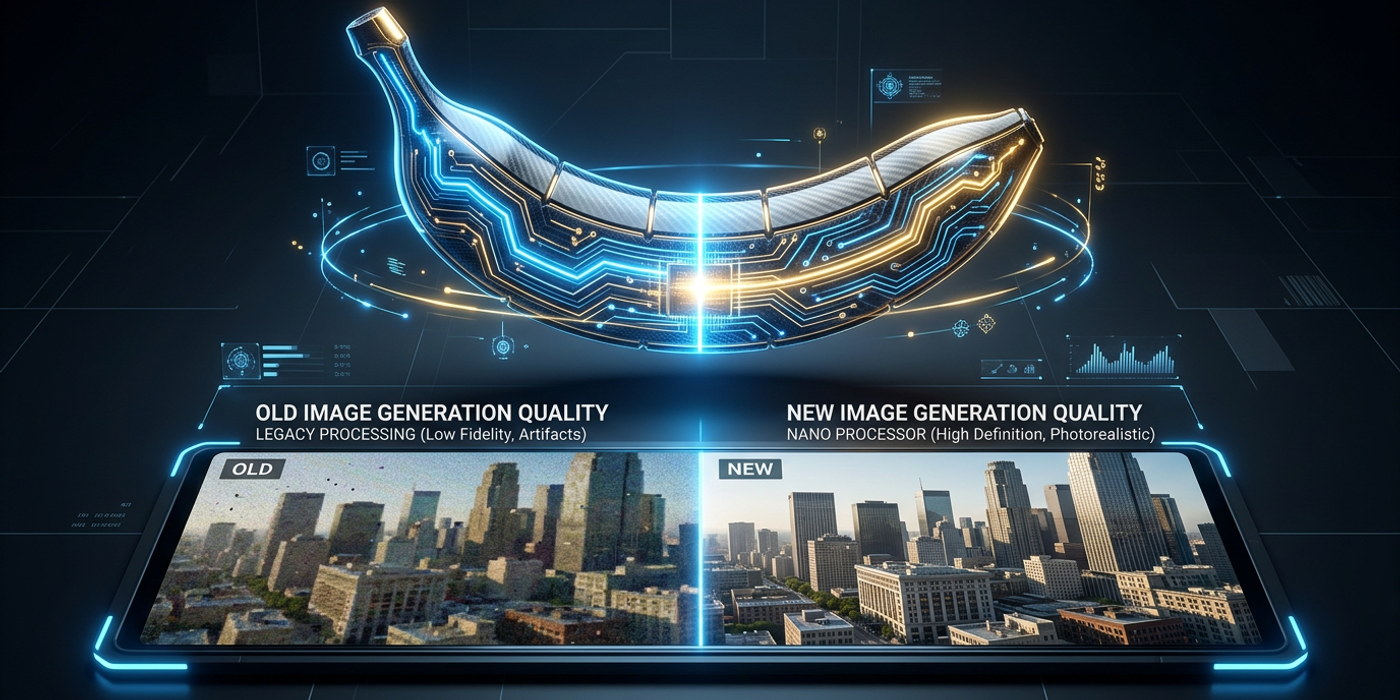
Google Nano Banana 2.1 cuts AI image costs by 50%, improves visual quality, adds multi-character consistency, and supports 14 reference images for HK creators.
Google just released Nano Banana 2.1, a significant update to its image generation and editing model that cuts prices by roughly half while improving quality across the board. For HK creators producing social media, e-commerce, and advertising content, this means better images at Flash-tier speed with a fraction of the compute budget.
What's New in Nano Banana 2.1
The biggest headline is the price drop. A 1K image now costs 3.36 cents (down from 6.70), and a 4K image runs 7.56 cents (down from 15.10). That's effectively half the cost for the same resolution tier — and Nano Banana 2.1 runs at Gemini Flash speed, not the slower Pro tier.
On the quality side, Google says 2.1 "improves across the board": better visual quality, stronger text rendering, wider panoramas, and notably stronger character consistency across conversation turns. The model can process up to 14 reference images at once, keeping up to 4 characters and 10 objects consistent in a single session.
It also offers three thinking levels — minimal, medium, and high — that trade speed for image quality. In benchmarks, the "thinking" mode often beats Nano Banana Pro on preference scores, though in practice Pro still produces better complex images.
What This Means for Your Workflow
For HK creators and agencies running regular AI image pipelines, the math is straightforward. If you're generating 1,000 1K images a month, Nano Banana 2.1 drops your monthly cost from $67 to $33.60. At scale for product photography, social media batches, or ad variations, those savings add up fast.
More importantly, the multi-reference editing unlocks consistent branded content. Upload up to 14 product shots as references — Nano Banana 2.1 can maintain character and object consistency across generations without the wrestling match older models required. For e-commerce brands in Hong Kong producing seasonal campaigns, this is a genuine workflow improvement.
The model also connects to Google Search, letting it fetch contextual knowledge for prompts that reference real-world products, places, or cultural references — particularly useful for HK brands creating bilingual content that needs regional accuracy.
Where It Fits in the AI Image Landscape
Nano Banana 2.1 slots between the free or cheap tier (FLUX Schnell, Stable Diffusion) and premium models (Nano Banana Pro, Ideogram 4.5). At 3.36 cents per 1K image, it's competitive with Recraft and Leonardo while offering Google's ecosystem advantages — Search integration, Gemini-level speed, and the widest reference-image pipeline on the market.
The real competition is against Ideogram 4.5 (in-place editing) and Black Forest Labs' FLUX 3 Image (multi-step editing). Each model pulls ahead on different strengths. Nano Banana 2.1 wins on cost and reference consistency; Ideogram wins on precise local editing; FLUX 3 wins on open-weight flexibility. In Cooly Studio, you can test all three side by side and pick the best model for each job.
Frequently Asked Questions
Q: How much does Nano Banana 2.1 cost compared to Nano Banana 2? A: Roughly half — 3.36 cents per 1K image vs 6.70 cents. A 4K image drops from 15.10 to 7.56 cents.
Q: How many reference images can Nano Banana 2.1 handle? A: Up to 14 reference images at once, keeping 4 characters and 10 objects consistent across generations.
Q: Is Nano Banana 2.1 better than Nano Banana Pro? A: In some benchmarks, yes — but in practice, Pro still produces better complex images. Think of 2.1 as the cost-efficient daily driver and Pro as the premium option for hero shots.
Q: Does Nano Banana 2.1 support Chinese text rendering? A: Yes — improved text rendering includes Chinese characters, making it a strong option for bilingual HK ad content.
Q: Can I use Nano Banana 2.1 in Cooly Studio? A: Yes — Nano Banana 2.1 works with the same API as version 2. In Cooly Studio, you can switch models and start generating immediately at the new lower rates.