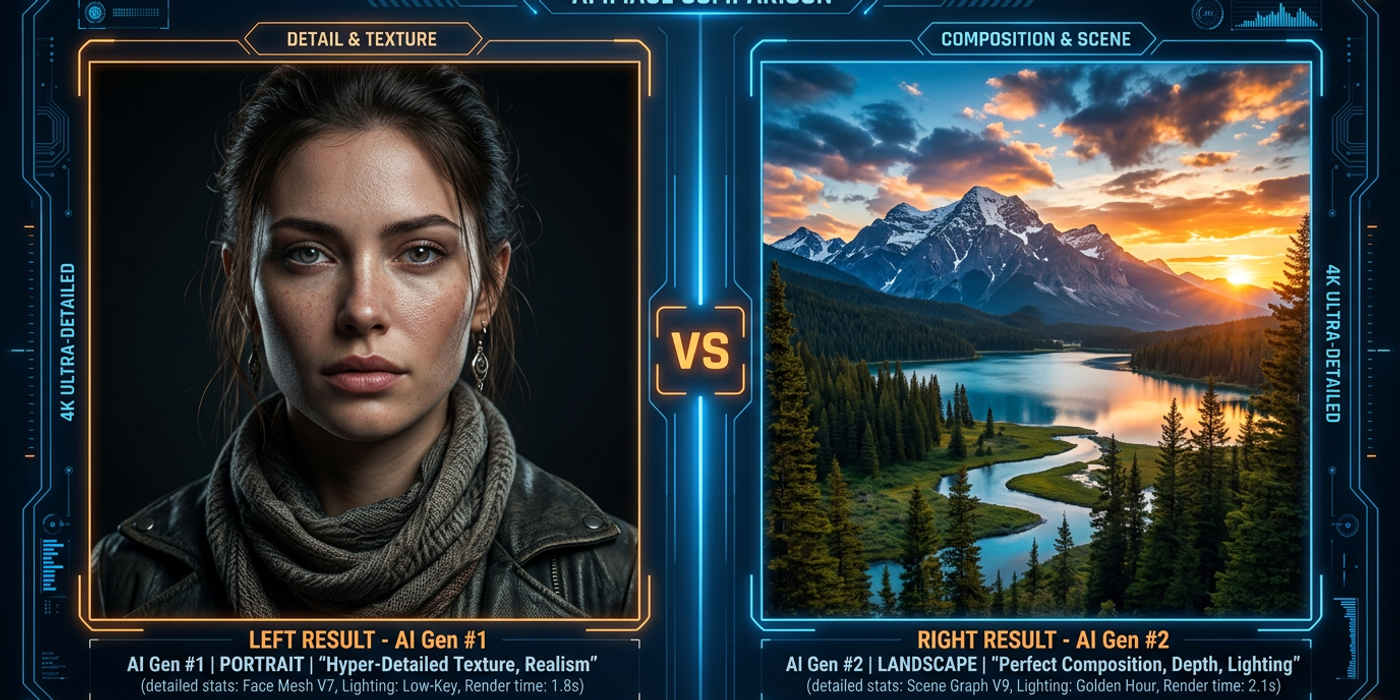
Three months after launch, we revisit Seedream 4 and Nano Banana 2. Which performs better in real workflows — and how do new competitors change things?
Seedream 4 vs Nano Banana 2 — Mid-2026 Review: Which Won?
If you chose between Seedream 4 and Nano Banana 2 back in May, the decision might look different now. Three months of real-world use, thousands of updates, and a wave of new competitors have reshaped AI image generation. Here's how both models hold up in August 2026.
Where We Started
Seedream 4 and Nano Banana 2 represented two philosophies. Seedream 4, on Stability AI's Seed architecture, prioritised fine-grained texture — skin pores, fabric weaves, foliage. Nano Banana 2, backed by Google DeepMind, focused on compositional coherence — how objects relate within a frame, the mood of a scene, consistent lighting across multi-subject images.
Both were impressive. Both had clear strengths. After three months of production use by Hong Kong's creative community, patterns have emerged that weren't obvious in initial reviews.
What Changed: Seedream 4
Seedream 4 has received three significant updates since May. The most impactful: improved hand and face consistency — the June update cut multi-finger anomalies by roughly 40%. Text rendering, a weak point at launch, now supports legible signage and product labels at medium distances.
Strict prompt adherence remains its killer feature. For brand work where a client specifies exact details, Seedream 4 delivers on first pass roughly 85% of the time. That reliability matters when you're billing by the deliverable.
The model hasn't improved much in batch speed. At 1K resolution, it still takes 8–12 seconds per image, and concurrent queue processing slows under heavy load.
What Changed: Nano Banana 2
Nano Banana 2 has seen even more updates — four point releases including a July architecture optimisation that reduced inference time by roughly 20%. It now generates 1024×1024 in 5–8 seconds, making it the faster option for high-volume work.
The DeepMind team also improved prompt adherence in complex scenes. The July update pushed 7+ element prompt compliance from roughly 75% to 85%, closing the gap with Seedream 4.
Where Nano Banana 2 still leads decisively: compositional coherence. Group shots feel natural. Characters don't melt into backgrounds. For architectural visualisations and landscapes, it remains the stronger choice.
The Contenders Arrived
The biggest change since May isn't the updates — it's everything else.
xAI Imagine Image 2.0 brings built-in editing — inpainting, outpainting, style transfer — in the generation interface. Quality is competitive with both models at standard resolutions, and the integrated workflow eliminates post-processing. For agencies producing social media content, it saves significant time.
GPT-Image-2 matches Nano Banana 2's photorealism while offering superior text rendering. Its Chinese-language support makes it especially relevant for Hong Kong's bilingual market.
Microsoft MAI-Image-2.5 matches Nano Banana 2 on quality while integrating with the Microsoft 365 ecosystem. For agencies on Azure or Teams, the workflow integration is a compelling add-on.
What This Means for Your Choice
The question has shifted from "which is better?" to "which model for which task?"
Product photography and brand assets with exact specs → Seedream 4 remains the gold standard. Its prompt adherence and fine texture work are unmatched, though GPT-Image-2 offers comparable quality with better text.
Landscapes, architecture, atmospheric scenes → Nano Banana 2 wins. Its compositional coherence and efficient batch processing make it ideal for high-volume environmental work.
All-in-one workflows needing generation and editing in one tool → xAI Imagine Image 2.0. The reduced context switching improves turnaround for social media content.
Bilingual content with Chinese text → GPT-Image-2's text rendering gives it a distinct edge.
The Bottom Line
Both models have improved since launch, and both remain excellent. But the landscape has shifted enough that your original decision might benefit from a fresh look. The best approach in August 2026 is matching the model to the task and being ready to pivot as new options arrive.
Frequently Asked Questions
Q: Is Seedream 4 still better than Nano Banana 2 in 2026? A: It depends on your use case. Seedream 4 excels at detailed texture and strict prompt adherence. Nano Banana 2 leads in compositional coherence and speed. Neither is universally better.
Q: Has Nano Banana 2 improved its prompt adherence? A: Yes. The July 2026 update pushed complex prompt compliance from 75% to 85%, closing most of the gap with Seedream 4.
Q: How does xAI Imagine Image 2.0 compare? A: It's competitive on quality with built-in editing tools neither model offers. For agencies wanting generation and post-processing in one tool, it's a strong alternative.
Q: Which model handles Chinese text best? A: GPT-Image-2 leads for Chinese text rendering. Both Seedream 4 and Nano Banana 2 have improved, but GPT-Image-2 handles bilingual signage more reliably.
Q: Can I use both models in the same project? A: Yes, and many Hong Kong agencies do. Cooly Studio supports switching between models within one project — Seedream 4 for product shots, Nano Banana 2 for environments.
Q: Which is more cost-effective for high-volume work? A: Nano Banana 2 is more economical at scale, especially at 2K+ resolutions. Seedream 4 costs slightly more per image but may save time through fewer regenerations for detail-critical work.
Q: Are there models that surpass both in 2026? A: GPT-Image-2 matches or exceeds both on photorealism and text rendering. Microsoft MAI-Image-2.5 is comparable on quality with strong enterprise integration. No single model dominates all metrics.
Q: Should I switch from my current choice? A: Not if it's working well. But test newer models for specific pain points — GPT-Image-2 for Chinese text, Nano Banana 2's latest for faster batch processing.