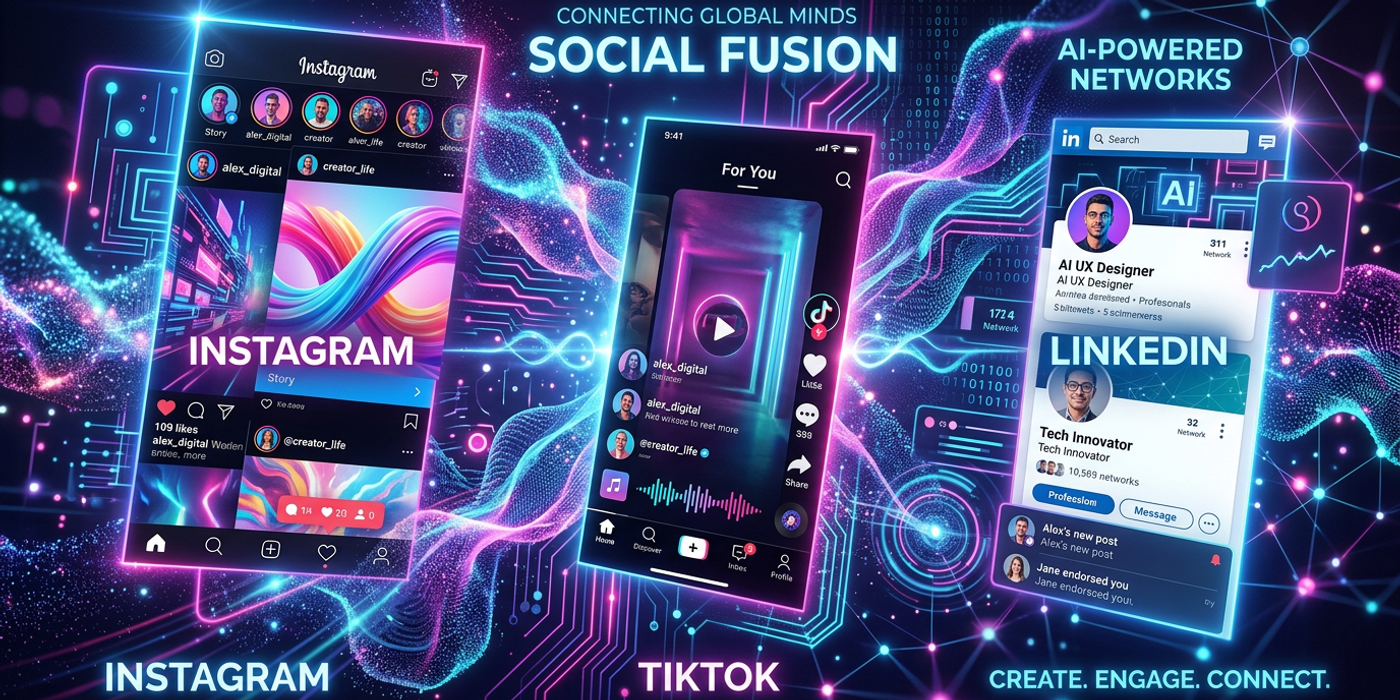
Discover how AI-generated social media content is transforming marketing in 2026 — from AI video to images at scale. Key trends for brands and creators.
1|## The Growth of AI-Generated Social Media Content in 2026 2| 3|It wasn't that long ago that scrolling through Instagram meant seeing almost nothing but human-created content. By mid-2026, that picture has changed dramatically. AI-generated images, video, and writing are now woven into what brands, creators, and everyday users post. Nearly 35% of all visual content on major social platforms now has some level of AI involvement — and that number keeps climbing. 4| 5|### Why AI Social Media Content Is Growing So Fast 6| 7|Three key drivers are behind the rapid rise of AI-generated social media content in 2026. 8| 9|Speed is the most obvious one. A social media manager who needed three days to brief a designer and review drafts can now generate on-brand images in Cooly Studio in under ten minutes. For time-sensitive campaigns, that speed is a game-changer. 10| 11|Cost is the second factor. Hiring a graphic designer or video editor for every piece of social content is expensive, especially for small businesses and startups. A single subscription to a capable AI image generation platform replaces multiple freelance invoices, and the quality gap between AI-generated and traditionally-produced visuals has narrowed to the point where most audiences can't tell the difference. 12| 13|Volume is the third reason. Social media success in 2026 isn't about one viral post — it's about consistent, daily output. Brands need to post multiple times across multiple platforms. AI lets a single person maintain that output without burning out. A creator who managed three posts per week can now produce fifteen with AI assistance. 14| 15|### How Different Social Platforms Are Adapting to AI Content 16| 17|Every major social platform has taken a different stance on AI-generated content. 18| 19|Instagram has been the most permissive. Meta's platform allows AI-generated images and videos with proper labels. The Explore page regularly features fully AI-generated posts in art, design, and fashion niches. Instagram's "Made with AI" label system is now standard. 20| 21|TikTok has leaned into AI harder than any other platform. Its internal tools — TikTok Symphony for AI video and AI avatars — signal that AI empowers creators. Many top categories, like stylised travel shots and satisfying compilations, are increasingly AI-produced. 22| 23|LinkedIn initially resisted but has changed course. The platform now has an AI-powered writing assistant in its post composer, and top thought leaders openly share AI-generated infographics. LinkedIn's audience prefers substance over style, so AI is used more for data visualisation than flashy visuals. 24| 25|YouTube Shorts has become a major destination for AI video content. The recommendation algorithm has been observed to favour AI-generated explainer videos, AI voiceover content, and automated video compilations — as long as they deliver genuine value to viewers. 26| 27|### The Most Popular Types of AI Social Media Content in 2026 28| 29|Certain content formats have emerged as clear winners in the AI-generated social media landscape. 30| 31|AI-generated product shots dominate e-commerce feeds. Brands use AI to create studio-quality product photography without renting a studio or hiring a photographer. A single product can be rendered against dozens of backgrounds, in multiple lighting setups, from any angle — all in one session. 32| 33|AI video avatars have exploded on LinkedIn, Facebook, and corporate Instagram. Rather than recording themselves on camera, professionals generate AI avatars that deliver their script naturally. The best examples are indistinguishable from real recordings. 34| 35|AI-generated carousel posts are the most popular format on Instagram for educational content. Instead of designing each slide manually in Canva, creators type their content and let AI tools produce cohesive, branded slide decks. A 10-slide carousel that took two hours now takes ten minutes. 36| 37|AI-enhanced UGC campaigns are trending. Rather than asking customers to film themselves (low uptake), brands provide AI tools for customers to customise pre-generated templates — creating a hybrid of branded content and genuine user participation. 38| 39|### What This Means for Hong Kong Brands and Creators 40| 41|For Hong Kong's creative community, the rise of AI social media content is both an opportunity and a wake-up call. 42| 43|The opportunity is clear: lower costs, faster turnaround, and the ability to compete with bigger brands on production quality. A small Hong Kong boutique can now produce Instagram content that looks like it came from a luxury fashion house, because AI models like Flux Schnell and Seedream 4 don't discriminate by budget. 44| 45|The wake-up call is about standing out. As AI-generated content becomes the baseline, what will differentiate successful Hong Kong brands is — paradoxically — human input: unique brand voice, genuine local cultural references, creative prompt engineering, and the taste to know which AI outputs are good enough. Tools like Cooly Studio have become essential, not just for generating content but for refining and adapting it across multiple platforms. The brands winning on social media aren't the ones using AI to replace creativity — they're using AI to scale it. 46| 47|## Frequently Asked Questions 48| 49|Q: Is AI-generated social media content bad for organic reach? 50|A: Not in 2026. Platform algorithms prioritise engagement signals over how content was created. High-quality AI content that resonates with an audience performs just as well as human-created content — sometimes better, because AI tools iterate faster to find what works. 51| 52|Q: Do I need to label content as AI-generated on social media? 53|A: Instagram and TikTok require AI labels for political or realistic content. Standard creative content (stylised images, artistic videos) typically doesn't need labelling, but check each platform's latest guidelines for your region. 54| 55|Q: Can AI replace my social media manager? 56|A: Not entirely. AI handles production volume and speed, but a skilled manager provides strategy, brand voice, audience intuition, and community management. The most effective teams in 2026 pair human direction with AI production. 57| 58|Q: How do I maintain brand consistency with AI-generated posts? 59|A: Use reference images and consistent prompts. Most AI tools let you upload a brand asset as a style reference. Combine this with a prompt template that includes your brand's visual keywords. 60| 61|Q: What's the best AI image model for social media content in 2026? 62|A: It depends on the platform. For Instagram and Pinterest, Seedream 4 and Nano Banana 2 produce the most polished images. For LinkedIn infographics, Flux Schnell offers fast, clean outputs. Cooly Studio bundles all these models in one interface. 63| 64|Q: Are audiences tired of AI-generated content? 65|A: Audiences are tired of bad content, regardless of how it was made. Well-crafted AI content that provides genuine value performs perfectly fine. Backlash only comes when AI content feels cheap, deceptive, or lazily produced. 66| 67|Q: How much does AI social media content cost in 2026? 68|A: Costs have dropped dramatically. A single high-quality AI image costs pennies. Monthly costs for a small brand are typically $50–$200 USD for images and $100–$500 USD for video — far less than traditional production. 69| 70|Q: Does AI-generated content hurt authenticity on social media? 71|A: It can if used carelessly. But authenticity comes from the ideas and values behind the content, not the tool. A genuine brand message delivered through an AI-generated visual is still authentic. The risk is when brands use AI to manufacture personality they don't have.